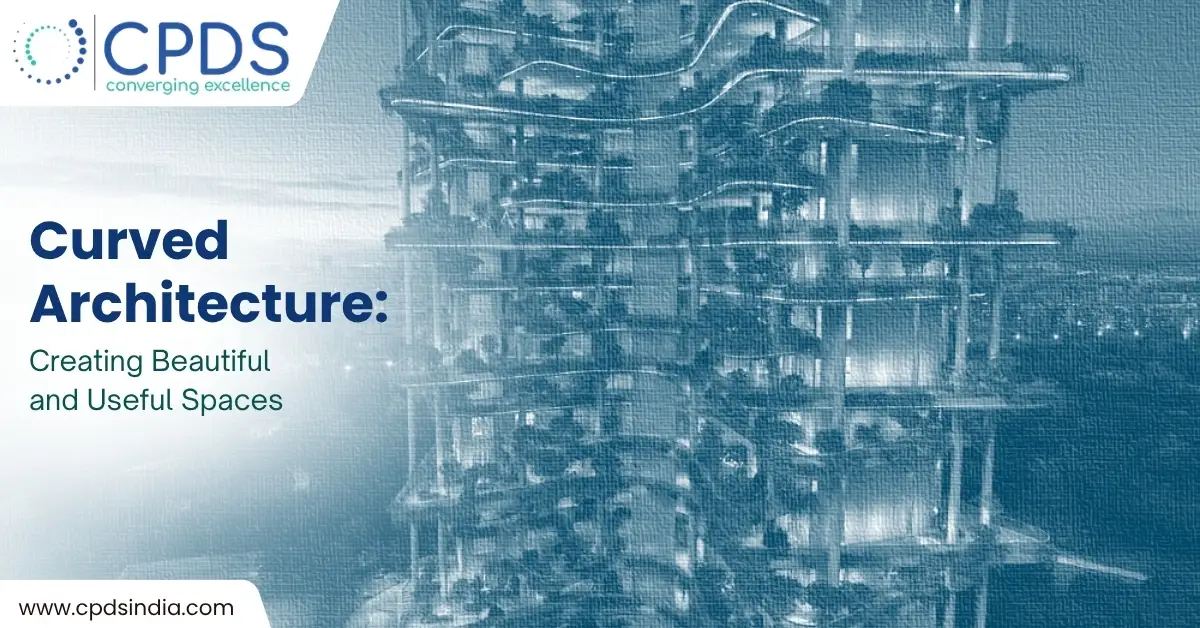
Aesthetics Curves give a space a more organic and natural appearance, softening its lines and giving it a sense of elegance and grace.
Making the Most of Space: In urban settings with limited land, curves can maximize the utilization of available space. More usable interior spaces can be produced by rounded walls and corners.
Load Distribution: In addition to providing aesthetic appeal, curved load-bearing walls can effectively transfer structural loads.
Comfort: Homes and hospitals benefit greatly from curved curves because they create a feeling of intimacy and enclosure.
Curved elements necessitate careful planning and complex calculations, in contrast to rectilinear constructions.
Curved elements are not necessarily suitable for traditional building techniques. It is necessary to use specialized fabrication procedures, which can be costly and time-consuming.
Collaboration between architects, structural engineers, and builders is necessary for this kind of building. It is essential for handling issues related to safety, building, and design.
Because not all materials can flex without losing their structural integrity, choosing the right material requires careful consideration. To guarantee durability and safety, it is essential to strike a balance between aesthetic appeal and structural soundness.
Compared to standard designs, curved features usually require more time and resources to incorporate.
Because it requires specialized construction methods, specific manufacturing, and experienced labor, curved architecture can be more costly.
Future design trends are influenced by curved building, which offers a harmonious blend of practicality and beauty. In the field of architecture, circular patterns continue to arouse curiosity and creativity. Adopting circular designs creates areas that are both aesthetically pleasing and functional for future generations.