This is where a project management consultancy(PMC) plays a crucial role in closing that gap.
The primary objective of a PMC is to ensure that every aspect of the project progresses according to plan. Depending on the project’s requirements, a PMC acts as the owner’s extended team. Its role can extend across the entire project lifecycle, from feasibility studies and budgeting to construction supervision, risk management, quality control, and project handover.
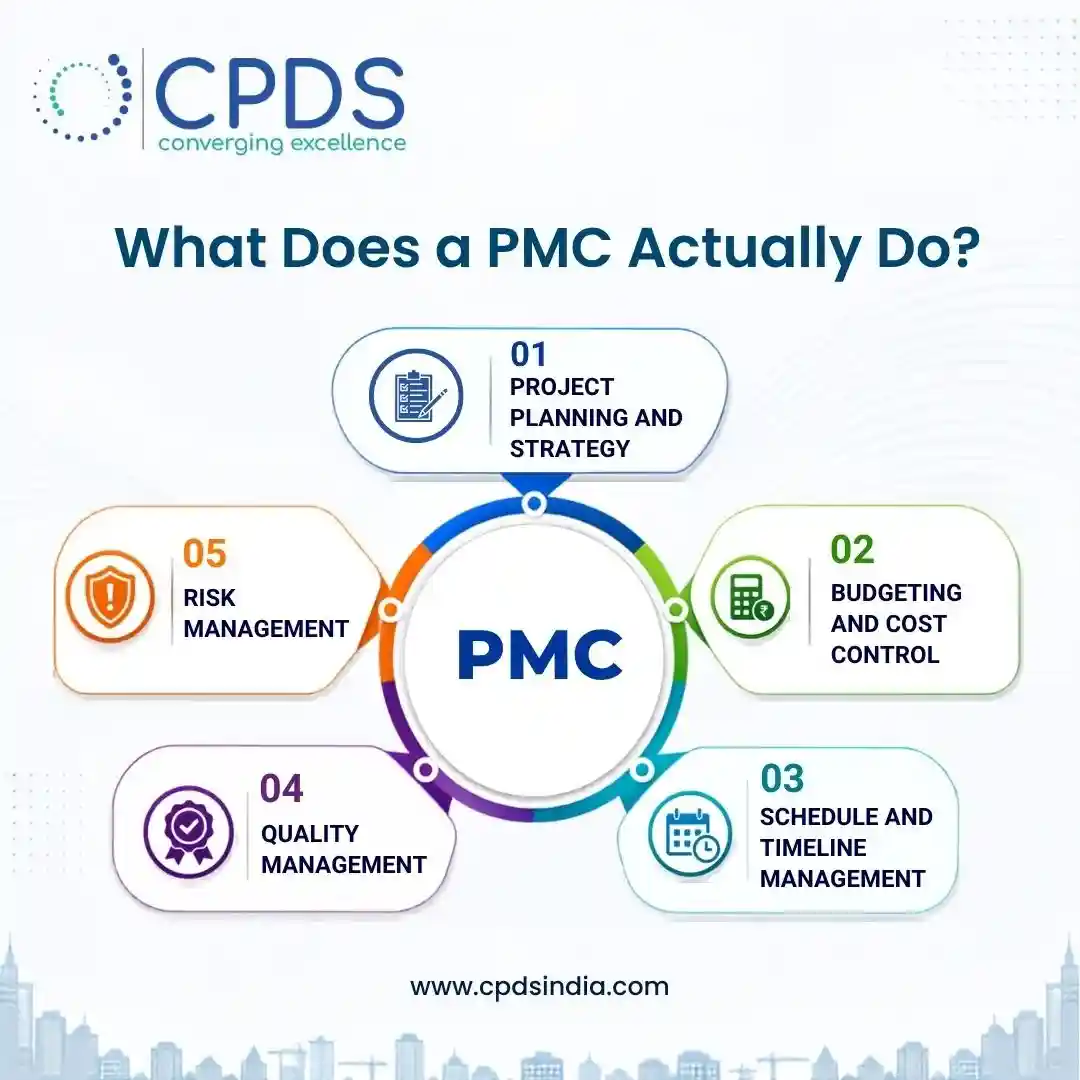
The responsibilities of a Project Management Consultancy typically span the full project lifecycle. However, the role can vary depending on the project’s size and complexity. Some core functions include:
Big projects usually have several contractors and suppliers working at once. With poor coordination, it may lead to delays, conflicts and duplication of work.
PMC coordinates them. It tracks their progress to ensure that work is done as per the agreed scope, specification and schedule.
Delays may greatly increase costs for projects. They also affect business operations. A project management consultant develops a schedule, identifies key tasks to be performed, and regularly monitors progress. If potential delays arise, the PMC can identify the underlying causes and work with the relevant teams to minimise their impact on the overall project timeline.
Maintaining consistent quality throughout a project requires continuous monitoring. PMCs implement QA/QC processes at every stage of the project. PMC ensures that materials, processes, and completed work meet the required specifications. This proactive approach helps identify issues early, reducing the risk of costly rework later.
Every project comes with potential risks. Project management consultancy identifies, assesses, and prioritises risks early, and then develops and monitors mitigation strategies. The main agenda of the PMC is to keep the project running and on track.
Hiring a PMC provides clients with professional expertise and an independent perspective throughout the project. Rather than managing multiple contractors and technical teams independently, the client has a dedicated professional team responsible for overseeing the project’s progress.
Some of the key benefits include:
From concept to handover, successful projects require more than individual expertise. They require a coordinated approach that brings together design, cost, procurement, scheduling, construction, quality, and risk management.
A professional project management consultancy acts as a trusted partner throughout this journey. By working as an extension of the client and taking ownership of project delivery, it helps transform complex requirements into structured, measurable outcomes.